'We are passionate about art and music and love what we do. Sharing our love and knowledge is part of our life. Roots and culture, art and music must go on in the generations to come.'
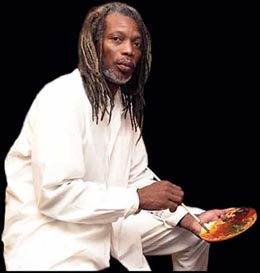
In the years surrounding Belize’s independence, one artist stood at the center of a cultural turning point: Pen Cayetano. At a time when migration, modernization, and economic pressures were reshaping coastal Garifuna communities, Cayetano transformed ancestral rhythm into a contemporary sound that would carry Garifuna identity onto international stages. Painter, drummer, songwriter, and cultural advocate, he did not treat tradition as a museum artifact — he amplified it.
Born in 1954 in Dangriga, often regarded as the cultural heart of the Garifuna in Belize, Cayetano apprenticed under master drummer and drum maker Isabel Flores. Deeply grounded in sacred and communal forms such as punta and dugú ceremonial rhythms, he understood the spiritual architecture of Garifuna music: the three garaón drums (primera, segunda, tercera), call-and-response vocals, turtle-shell percussion, and participatory dance. Rather than preserving these forms in isolation, he reimagined them for a new generation.
In 1981 he founded the Original Turtle Shell Band, electrifying traditional punta rhythms with amplified guitar, bass, and drum kit. The result became known as punta rock — a modern expression rooted in sacred punta but infused with reggae, calypso, R&B, and Belizean Creole “boom-and-chime” guitar textures. Unlike Afro-Cuban music built around the 3-2 clave, punta rock pulses with a driving, hip-centered rhythm that invites a distinctly Garifuna style of dance. What emerged was not fusion for its own sake, but continuity through adaptation.
Cayetano’s early recordings (1980–1982), later remastered and released through Turtle Shell Music, capture the raw birth of the style just as Belize entered nationhood. The music retains the urgency of street performances in Dangriga — layered percussion, improvised vocal interplay, Spanish and Garifuna lyrics interwoven. Later compilations such as The Best of Punta Rock document two decades of evolution, showing how the music expanded while retaining its ancestral rhythmic core.
Beyond performance, Cayetano became one of the most visible cultural advocates of the postwar Garifuna generation. As large numbers of Garifuna migrated to the United States after World War II, language use and ceremonial knowledge began to decline. Cayetano responded not with nostalgia, but with creation — mentoring youth, performing internationally, and positioning Garifuna music within global African-diaspora conversations. Since the 1990s he has lived part-time in Germany while maintaining strong artistic ties to Belize and the Garifuna diaspora.
His work paved the way for later international recognition of Garifuna culture, including its proclamation by UNESCO in 2001 as a Masterpiece of the Oral and Intangible Heritage of Humanity. Punta rock bands now stretch along the Caribbean coast of Central America and into diaspora communities in New York, Los Angeles, and beyond — a direct legacy of Cayetano’s innovation.
Pen Cayetano’s importance lies not only in founding punta rock, but in demonstrating that cultural survival requires motion. By electrifying the garaón drums and carrying Garifuna rhythm across borders, he ensured that the heartbeat of his people would remain audible in a changing world.
Sources
- UNESCO – Garifuna Language, Dance and Music (Intangible Cultural Heritage listing).
- Greene, Oliver N. Garifuna Music and the Politics of Transnational Cultural Identity.
- Palacio, Joseph O. The Garifuna: A Nation Across Borders.
- Turtle Shell Music recording archives and interviews with Pen Cayetano.
- RootsWorld